
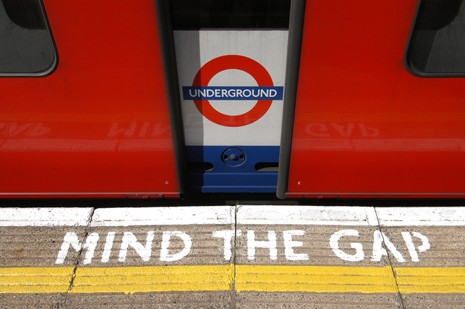
Mind The Gap: Why Intent Doesn’t Always Equal Action.
It’s not lying, it’s human nature – The Say-Do Gap.
Research participants are rarely dishonest on purpose. They often answer research questions based on their ideal self or current mindset, while real-world decisions are shaped by context, habits, and subconscious thinking. New Year’s resolutions are a familiar example: although intentions are sincere, only about 8% – 9% of people who make them succeed over the following year. In other words, there is often a gap between what people say they will do and the actions they ultimately take. What people say does not always align with what they do—a phenomenon known as the Say-Do Gap.
In research, the Say-Do Gap often appears during interviews and surveys. Participants usually answer as honestly and thoughtfully as they can, but they may struggle to explain their motivations, describe their feelings about a concept, share uncomfortable reactions, or accurately express the intensity of an emotion.
They may also be unaware of the automatic, subconscious biases that influence everyday choices. Although respondents may want to provide a complete picture, communicating it verbally or in writing can be difficult. When they take extra time to prepare and refine their answers, response bias can also creep in – even when researchers take steps to prevent it.
So how can a research team bridge the gap?
To bridge the Say-Do Gap, research teams must look beyond self-reported answers and integrate objective, non-verbal measures into their methodologies. In traditional surveys and interviews, participants’ answers are often shaped by conscious thinking and “my ideal self” bias. Researchers can bypass these filters by employing tools such as eye-tracking, galvanic skin response, facial coding, and real-time observational metrics – alongside psychologically primed scenarios that replicate real-world environmental challenges.
These tools provide an unedited record of direct physical and emotional engagement, revealing what participants genuinely feel and do moment-to-moment. When paired with standard qualitative questioning, this dual-layered approach connects emotional reactions (“what happened”) directly to the respondent’s articulated reasoning (“why they think it happened“).
Underpinning self-reported feedback with observational behavior data allows teams to uncover subconscious drivers, filter out response bias, and generate significantly more accurate predictive insights for real-world decision-making.
It’s important to understand that the Say-Do Gap isn’t a data error; it’s a window into human behavior. Implementing research designs that account for both self-reported feelings and subconscious drivers will paint a fuller picture and generate more reliable forecasts with stronger decision-making.