The Collaboration You Probably Don’t Know About

There’s no substitute for experience and expertise.

We have been collaborating on research that combines qualitative methods and advanced technology for about 15 years. However, we’ve never actually told the world about this. So, here goes.

Market research is a team effort. High-quality outcomes require that all participants do excellent work and know how to work together. Today’s evolving landscape often requires the integration of traditional qualitative research with behavioral and emotional measures such as eye tracking and biometrics.  A high degree of experience working with these tools – and working seamlessly – is essential to producing quality results that yield unexpected insights.

Combining advanced technology with qualitative methods is an unbeatable combination. It allows us to uncover what people really notice and respond to – often beyond what they can articulate themselves. But only if everybody involved understands the tools and techniques.

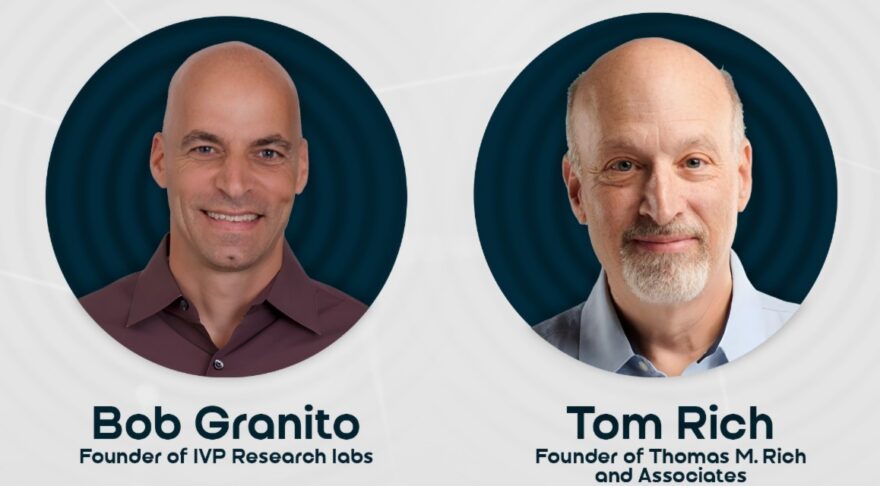
We have worked together dozens of times on this type of research. Bob provides the advanced technology. Tom handles the qualitative research design, execution and analysis. This combination yields outstanding results because IVP is the leading provider of eye tracking and biometric technology to the market research world, and Tom is widely known for combining these tools with qualitative methods.

People often view biometrics as a plug-and-play solution. But success depends upon more than sophisticated equipment. If the qualitative researcher moderating the study doesn’t understand eye tracking or biometrics, important opportunities will be missed. The study design could be flawed, important questions might not be asked, perceptions might not be probed, and valuable insights will never surface.

What’s more, collecting and analyzing biometric data is both art and science. If the people responsible for the technology aren’t experienced, you could easily end up with useless data and wasted time and money.

The same principle applies on the back end. Biometric data has little value unless those responsible for its analysis understand marketing strategy, motivation, and decision-making. This allows data to be translated into meaningful stories and actionable insights.

That’s why collaboration matters. Successful studies occur when all parties understand one another’s disciplines. The difference between a good study and a great one is ensuring that every link in the chain is strong from the beginning to the end.

Eye Tracking. It’s Been Around For Ages.

What do we need, and how do we get it?

Humans are complex. There are many elements that go into decision making and preferences. In research, it’s typically easiest to just ask a respondent’s feelings- via a qualitative interview, quantitative survey, or some form of self-report.

However, sometimes ‘asking’ doesn’t tell the complete story or answer the deeper questions. Emotions, engagement, and attention can all be difficult for respondents to communicate clearly, and sometimes a “best guess” is more of a ‘wild guess.’  Tools that accurately measure behavioral and emotional feedback are becoming increasingly common, and one of the most common is eye tracking.  

Despite common assumptions, eye tracking is not a new technology. It has been used in research for more than a century. In the late 1800s, researchers studied eye movements using custom contact lenses fitted with pointers to record gaze patterns. These early methods required direct contact with the eye and a fixed head position, but they established principles and procedures that shaped the field.

Fortunately for today’s researchers, eye tracking technology has advanced significantly. It is now portable, contact-free, and even capable of remote data collection on a global scale. Whatever your research questions, there is an eye tracking solution that can capture the eye gaze data you need.

Having worked with eye tracking solutions for many years, we’ve seen various solutions mature over the years. Moving from tabletop-only monitors with built-in IR cameras to wearable glasses and HD webcam feeds, there have been a lot of changes that have really increased accessibility.  Also worth mentioning are the changes on the analysis side. Tasks that used to take days (or weeks) now take hours or minutes, and data that was previously hard to visualize is considered standard output.

From our perspective, one of the most notable recent shifts is how eye tracking devices are used in commercial research. For years, eye tracking was mainly used to produce visual outputs (such as heat maps and gaze replays) to show where respondents looked as indicators of visual attention. That remains a very valuable application, but there is now greater emphasis on eye gaze data that helps explain those visual patterns.

Metrics such as time to first fixation, total fixation duration, and many more are being used in increasingly novel ways to get a deeper understanding of respondent’s experiences. We can ‘reconstruct’ paths and activity to uncover trends and behaviors.

Ultimately, eye tracking provides a way to capture behavioral data that is otherwise difficult to attain. It is not easy for respondents to self-report where they looked, in what order, and for how long. Pairing the eye tracking ‘what’ data with a qualitative discussion to explain the ‘why’ is a modern and effective way to explore how participants act and feel.

Merge Tradition With Innovation Into Your Research

Often, hidden insights get revealed when traditional methods of qualitative research are coupled with technology-based approaches. When using conventional tools for self-reporting, we have found that respondents either cannot – or will not – fully reveal their thoughts and feelings about the topic that is being examined.

A well thought out research methodology – along with the right technology – can add tremendous value to research findings and deliver some unexpected results. It can provide a much clearer picture of what’s really going on in the minds of respondents by revealing subtle behavioral and emotional measures that may contradict what was ‘first said’ in the initial phase of the research. 
The following case illustrates how a successful merging of methodologies yielded a ‘big surprise.’

The Heart Failure Monitor
A medical device manufacturer developed a smart phone interface app to work with an implanted heart failure monitor. One-on-one interviews with cardiologists and electrophysiologists were conducted via an online qualitative research platform to get their feedback on the concept.

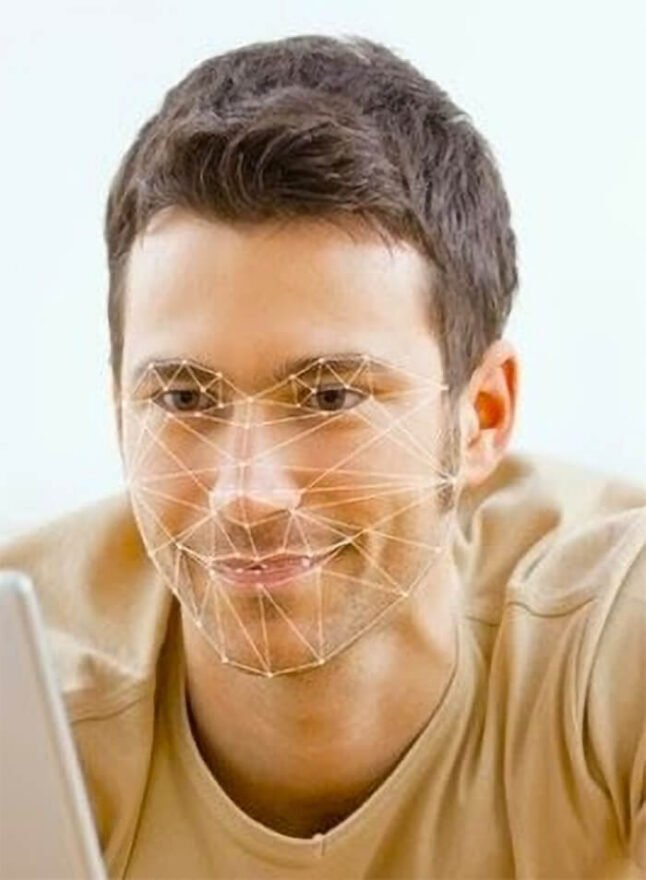
We began with a description of the smart phone app which was followed by a discussion to understand the physicians’ reactions to the concept while also observing and gathering facial coding data at the same time. Facial coding maps 25 areas of the face and translates these ‘action areas’ into the seven basic emotional states: fear, anger, disgust, joy, sadness, contempt and surprise.

What Was Said. Most of the physicians verbally expressed enthusiasm for the concept – stating that the app would give patients access to the data coming from their devices – leading to better management of their condition and greater control in the decisions made regarding their care.

What was Measured. However, the device apparently didn’t sit well with a lot of the physicians – as evidenced by the facial coding data that was collected. The data for nearly half of them exposed their subconscious feelings about the device and its impact on patients. It revealed emotions of anger, fear, and disgust which indicated many of the cardiologists and electrophysiologists were not enthusiastic about giving up control to, and empowering patients. 

This research was crucial in bettering the client’s understanding of the professionals’ mindset. Most importantly, it provided the direction they were going to need to craft a very different approach to marketing, its related promotional materials and training for their sales force.

Integration of traditional methods and technology informed a significant mid-course correction the client had to make in order to avoid a marketing fiasco. It eliminated the guesswork while giving the clients a view of the bigger picture.

Best Regards,
Bob Granito

*My thanks to Tom Rich with whom I collaborated on this study and who is an authority on integrating biometrics with qualitative methods.

Respondents are the cornerstone of any qualitative research study.

And, sometimes, the most fundamental tools in a qualitative researchers toolbox are still not enough to fully extract deeply embedded, key insights from the study respondents. If the research is a standard interview with a conversation between a respondent and a moderator, all of the feedback will be collected either verbally or in a survey through self-reporting.

However, for many research studies, technology can play a major role in collecting emotional or behavioral responses that are not self-reported. Here, the feedback will be passive, meaning the responses are collected without any conscious feedback from a participant. And that is why integrating technology with human-centered research should become part of the conversation – by demonstrating the exceptional value-added tech can add to any study.

The tools required to collect this data/information include eye tracking, facial coding, and biometrics. Let’s elaborate on each:

Eye tracking captures a respondent’s eye gaze behavior, and tells us where a respondent looks or doesn’t look, and for how long. Statistical data is provided through Areas of Interest – AOIs – and include metrics that signify how long it took to find an AOI, how long they looked at an AOI, the total number of times they looked at an AOI. When respondents simply report feedback using traditional self-reporting tools, they may be yielding insights that only ‘touch the tip of the iceberg.’

Facial Coding scientifically and unobtrusively measures the non-verbal emotional engagement of a participant that is revealed through facial expression. Facial coding maps 25 areas of the face and translates these ‘action areas’ into the seven basic emotional states: fear, anger, disgust, joy, sadness, contempt and surprise. Each state has specific characteristics associated with recognizing the emotion – regardless of demographics. The face reveals both conscious and non-conscious reactions, and those revelations can add significantly more depth to a study.

Biometrics uses sensors placed on the body of a respondent to capture the physiological response associated with a stimulus which measures:

  • Respondent levels of arousal through GSR (galvanic skin response)
  • Respondent’s levels of attention through HR (heart rate measurement)

Biometrics measure one’s emotional and cognitive responses to stimuli before any thoughts, words or actions can occur. A racing heart or sweaty hands will often reveal a much deeper and richer story.

All of these tools collect non-conscious responses passively and often reinforce and validate the reactions that are collected from participants through self-reporting. These behavioral or emotional measures can sometimes contradict what participants self-report because they were either unaware of their non-conscious behavior or could not articulate their complex feelings and emotions. This underscores the need to utilize a multi-dimensional approach to research that includes self-reporting along with the observational, behavioral and non-conscious methods technology offers us.

A well thought out methodology which includes self-reporting plus behavioral and emotional measures provides researchers with a complete picture – and a far deeper understanding of the user experience. This can lead to unanticipated research results which will often dictate that clients take a more novel approach to their marketing and research initiatives.

Best Regards,
Bob Granito

At-Home Biometric Neuromarketing Research

With many researchers conscious of travel, our clients are looking for creative solutions to get great insights while staying safe.

That’s why we are excited to introduce you to NeuroLynQ@Home. With this powerful technology, you can now conduct Neuro research remotely.
Together, Shimmer, Schlesinger Group and IVP deliver the new NeuroLynQ@Home service to provide a remote biometric monitoring system, allowing participants’ nonconscious emotional responses to be evaluated from the comfort of their own home.
  • Measure sweat gland activity and heart rate using a photoplethysmogram (PPG) sensor, which uses light absorption to measure changes in blood volume in their capillaries.
  • Access a moment-by-moment assessment of the participants’ emotional response to video, websites, gaming, and ethnographic stimulus.
  • Take advantage of turnkey service to recruit participants according to your specifications, manage the logistics of getting the sensors to and from the participants, and ensure that they complete the study in a timely manner.
Want to learn more about NeuroLynQ@Home? Don’t hesitate to reach out.

This neuromarketing technology uses galvanic skin response (GSR) and heart rate to measure participants’ emotional responses

Morganville, NJ and Cambridge, MA, February 2, 2021– IVP Research Labs, the leading provider of mobile marketing research labs, and Shimmer Research, a global leader in wearable technology for research applications, today announced the launch of IVP’s NeuroLynQ™ Service. NeuroLynQ technology is revolutionizing neuromarketing by making it easy and practical. With this biometrics solution, researchers can utilize GSR (skin conductance) and ECG (heart rate) readings to identify key moments and measure participant arousal and attention levels during in-person research. NeuroLynQ is ideal for focus groups and large audiences of up to 45 people.

Commenting on the news, Bob Granito, President, said, “This is an exciting time for IVP as we continue to grow and add value to market research. IVP, alongside our partner Shimmer Research, have sought to bring neuromarketing to the qualitative industry as another measure of consumer feedback. This solution will allow researchers to see consumers’ reactions beyond verbal communication and body language and give them a real-time analysis of how the respondents arousal and attention change throughout the research.”

“IVP Research Labs is a leader in bringing insightful technology to qualitative research. Together, we have the necessary infrastructure and technical expertise to support a seamless deployment of NeuroLynQ technology to neuromarketing researchers in the US and Europe. This user-friendly tool will allow researchers to adopt biometric measurements with ease and confidence,” said Geoffrey Gill, President of Shimmer Americas.

IVP Research Labs and Shimmer Research will be debuting NeuroLynQ on February 4, 2021 at the Qualitative Research Consultants Association (QRCA) annual conference.

To learn more, view the full press release:

IVP Research Labs and Shimmer Launch NeuroLynQ Service to Enhance Qualitative Research

Supporting Your Q4 Needs 

Online or In-Person


Whether online or in-person, IVP Research Labs is here to help you finish your year strong. 

With solutions for usability testing, eye tracking, facial coding and more, we are here to support your Q4 research in-person or virtually. Plus our expert team adds peace of mind by taking care of the details so you can focus on delivering timely and impactful research. 


Online Research 

Conduct easy-to-use online remote consumer research from the comfort of your home or office with IVP Research Labs.

Our experts:

  • Pre-qualify respondents and ensure they are prepared for their online experience
  • Test respondent webcams to deliver high-quality video capture
  • Ship cameras to respondents to guarantee the right point of view

In-Person Research 

IVP is taking extra precautions to ensure the safety of respondents, as well as researchers. 

Our teams: 

  • Follow the specific precautions of any facility we work at 
  • Adhere to physical distancing guidelines
  • Wear a face mask and other protective equipment at all times
  • Sterilize IVP equipment between interviews

Interested in learning more about our online and in-person capabilities? Don’t hesitate to pick up the phone and call with any questions or last-minute needs. We are here to help. 

Let’s Talk

Bob Granito
President, IVP Research Labs
BobG@IVPResearchLabs.com

We are excited to be partnering again with HCD Research, Schlesinger Group and Shimmer Inc. to study voters’ responses to the final Presidential Debate on October 22nd.

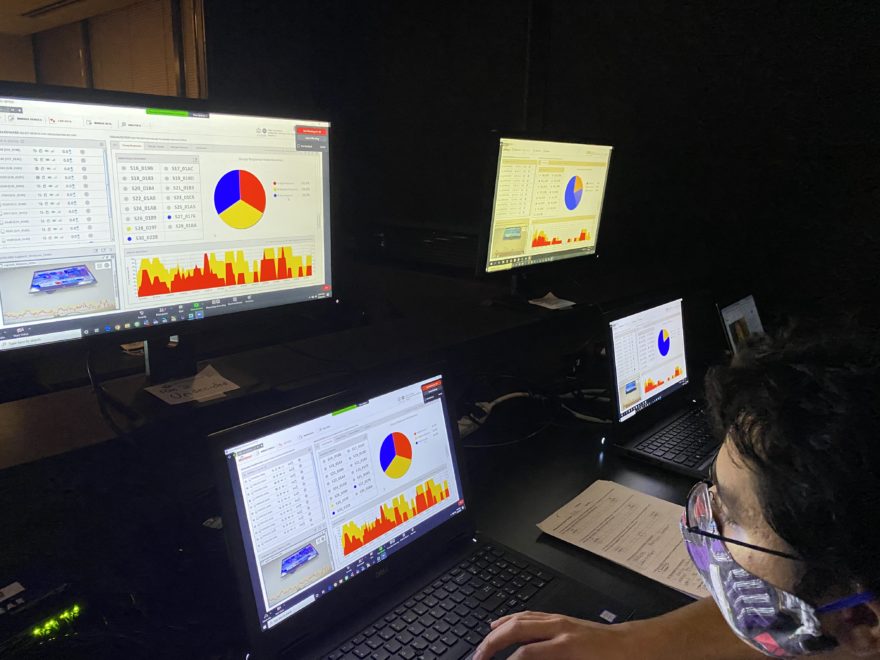
Together, we will be observing in real time a group of Republicans, Democrats and Independents in the battleground state of Pennsylvania. As these respondents watch the debate, they will be attached to sensors capturing their psychophysiological response.

By measuring second-by-second psychophysiological response of the voter, we will be able to identify the most impactful moments of the debate using quantitative neurological response.

Stay tuned to see the results from this research.

Can’t wait for the results? 

Reach out to learn how neuromarketing can help you deliver deeper insights.

Let’s Talk

Bob Granito
President, IVP Research Labs
BobG@IVPResearchLabs.com

As President Donald Trump and Democratic nominee Joe Biden faced off on stage for the first time, we partnered with HCD Research, Shimmer Research Inc., and Schlesinger Group to gauge voters’  psychophysiological responses to the September 29th Presidential Debate.

Many voters had decided who they were voting for prior to these debates with the expectation that they would side with their own candidate over the opponent. 

Going into the debate, Trump voters stated, “they both tend to say stupid things, but I feel like Trump is more factual and Biden is more emotional.” while Biden voters said, “I feel the debate skills that Joe Biden possess are greater than Donald Trump’s.”. 

But what would their psychophysiological responses reveal about how they reacted to the live performances of each candidate? Check out the results focusing on the big reaction moments of Trump, Biden, and Undecided voters during the debate.

Interested in learning more? Reach out to discuss how neuromarketing can help you deliver deeper insights.

Let’s Talk

Bob Granito
President, IVP Research Labs
BobG@IVPResearchLabs.com

As President Donald Trump and Democratic nominee Joe Biden faced off on the debate stage for the first time last week, we partnered with HCD Research, Schlesinger Group and Shimmer Inc. using neuroscience measurement to gauge voter response.

“It was all a mess,” “the interactions were distracting,” “it was out of control,” “utter disrespect,” “it was funny and completely pointless” – those were some of the words groups of Trump, Biden, and Undecided voters used to describe the debate. But how they felt non-consciously and their reactions in the moment to events during the debate reveal a more complicated story.

Click here to see an analysis of the initial results.

Let’s Talk

Bob Granito
President, IVP Research Labs
BobG@IVPResearchLabs.com